
What exactly is a format on TikTok?
You have something to say, but how you say it determines whether someone stays or keeps scrolling. On TikTok, a format is that invisible structure that turns an idea into content people recognize, consume, and share.
A format is not a template you copy and paste. It’s a structure: the way you present your message so it’s easy to follow, easy to remember, and easy to come back to. When someone recognizes your way of communicating, they feel on familiar ground. And that reduces the friction for staying to watch.
Thinking in formats lets you stop seeing your videos as isolated pieces and start seeing them as part of a language your audience already masters. Instead of inventing something from scratch every time you sit in front of the camera, you have a framework that saves time and reduces uncertainty. It’s not about being predictable; it’s about being recognizable.
Creators who grow consistently don’t improvise every video. They have a repertoire of formats they know and master, allowing them to publish regularly without depending on momentary inspiration.
The 5 formats that work best right now
There’s no magical list that works forever, but there are structures that deliver consistent results on TikTok:
- Explanatory: a clear idea developed step by step. Ideal for teaching, clarifying, or debunking. The key isn’t saying a lot, but saying just enough for the person to feel they’ve made progress. Works especially well when you solve a specific doubt your audience has.
- Narrative: you tell a story. Something that happened to you, something you observed, or a situation your audience recognizes. Stories hold attention because they create expectation: we want to know what happens next. They’re the oldest format in the world and they still work because the human brain is designed to follow narratives.
- Opinion: you share a point of view, not just information. This content tends to generate more comments because it invites people to take a stance. Used well, it positions you as someone with your own criteria. But be careful: an opinion without context can generate backlash. What works is opinion backed by experience or arguments.
- Reactive: you respond to a comment, a video, or a trend. You don’t start from scratch — you join something already in motion. It increases visibility and shows personality. It’s the most accessible format for beginners because you don’t need an original idea, just your own perspective on something that already exists.
- Demonstrative: you don’t just talk, you show. You teach how to do something, how a result looks, or how a process works. It builds trust because it makes visible what was previously just a promise. It’s the format that converts the most viewers into followers because it proves you know what you’re talking about.
None is inherently better than another. What matters is understanding what type of connection you want to create with your audience and choosing the format that best facilitates it.
How to use a format without becoming a copy
The most common mistake is seeing a format that works, replicating it exactly, and expecting the same results. A format is a structure, not a disguise. What makes it work for you is your content within that structure.
If you see the reactive format working, don’t copy the video everyone else is responding to. Find a comment on your own content that deserves a response. If the narrative format appeals to you, tell stories that are yours, not versions of what someone else already did. If demonstrative is your thing, show something you actually know how to do, not something you saw in another video and decided to imitate.
The structure saves you work. The original content gives you identity. When you combine both, you get something that feels familiar in form but unique in substance. And that’s exactly what makes people come back: they recognize the format, but discover something new each time.
Another way to avoid copying is to mix elements from different formats. You can start a reactive video and end with an opinion. You can make a demonstrative video that tells a story. Formats aren’t sealed compartments; they’re ingredients you can combine depending on what you need.
Mixing formats: why growing creators don’t stick to just one
Most creators who grow sustainably don’t use a single format. They build a mix. That combination keeps the audience interested and prevents your content from feeling repetitive.
Each format serves a different function within your strategy:
- Reactive and opinion formats attract new attention. They have the highest probability of appearing on the «For You» page because they respond to something already circulating.
- Explanatory formats deepen the relationship with existing followers. They’re the content that makes someone go from seeing you once to wanting to follow you.
- Narrative formats connect on an emotional level. They’re the videos people remember and share because they made them feel something.
- Demonstrative formats convert viewers into followers because they show, not promise. When someone sees you truly know how to do something, trust builds naturally.
The ideal ratio depends on you and your audience. But if you only use one format, you’re limiting your growth potential. The mix doesn’t have to be the same for everyone, but it should be intentional.
Choosing a format as a strategic decision
Choosing a format isn’t just a creative decision. It’s a strategic one. It depends on what you want to achieve with that particular video:
- Want more people to discover you? Reactive or narrative.
- Want them to trust you more? Explanatory or demonstrative.
- Want to generate conversation? Opinion.
- Want them to follow you? Demonstrative.
When you start thinking this way, your videos stop being improvisations and become pieces within a larger process. Each format has a purpose, and when you use it with that purpose in mind, results improve.
This doesn’t mean every video has to be calculated to the extreme. There’s room for spontaneity. But when you know which format to use and why, spontaneity becomes an informed choice, not an accident.
Creativity opens the door, structure lets you walk through it
On TikTok, creativity without structure gets diluted. And structure without creativity bores. What works is the combination: using known formats to give shape to original ideas.
You don’t need to invent a new format. You need to find the ones that best fit what you want to communicate, and use them with content only you can create. Originality isn’t in the form — it’s in what you put inside that form.
When you start mastering multiple formats, publishing stops being a challenge and becomes a decision. You no longer ask yourself «what do I do now?» but «which format works best for what I want to say this time?» And that difference completely changes your ability to create content consistently.
What you just read is just a preview. The full book gives you 20 step-by-step strategies to master TikTok in 2026.
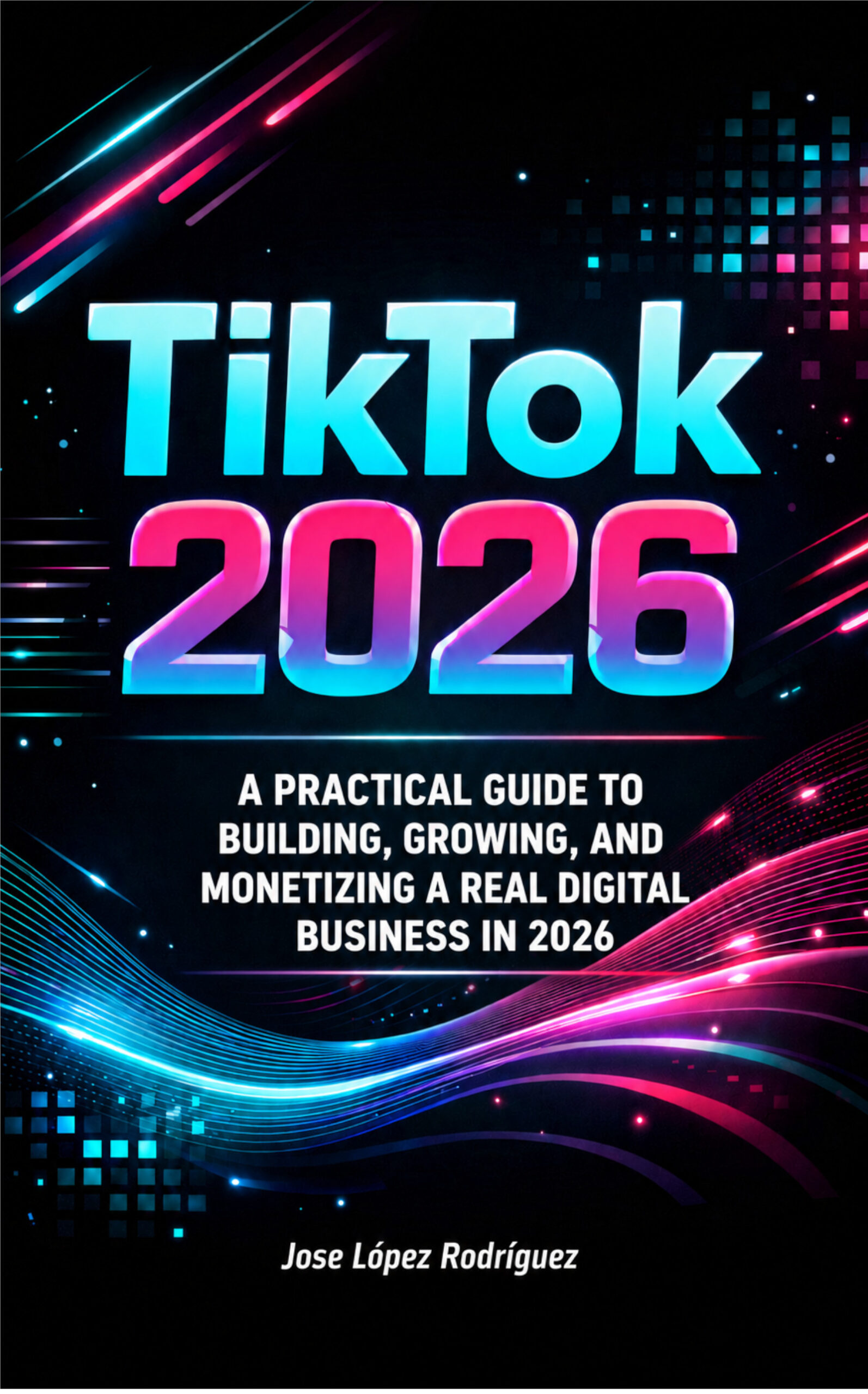
📖 TikTok 2026
The Definitive Guide to Mastering the Platform