
Sofía is a coach for managers. He has a personal brand, recurring clients and a very specific way of communicating: direct, warm, without empty phrases and with a real allergy to the clichés of the sector.
When he started working with Claude, the content was correct. Even good. But there was always something I had to delete.
“Powerful.” Out.
«Transformer». Out.
“I’ll accompany you on this journey.” Out.
Claude understood the corrections… but only within that conversation. The next time, they appeared again. It was not an intelligence problem. It was a problem ofunwritten rules. Until Sofía decided to write them.
Style is not negotiated every time
If you correct the same thing three or four times, it is no longerfeedbackpunctual. It’s criteria. And the criterion that is not documented is lost.
Many users try to force the style by correcting conversation after conversation. It works… until the topic, format or context changes. Style needs a place of its own. A document that has value in itself.
Each repeated correction is a sign that you are spending tokens—and patience—on something that should be resolved beforehand.Customize AI styles and tonesIt is not a luxury: it is efficiency.
Style manual vs. memory: not the same
Here is the usual confusion. Thememory(which we saw in the previous chapter) serves to remember how you work in general. Thestyle manualserves to decidewhat the content should sound like, regardless of the project.
They don’t compete. They complement each other.
The memory references the manual. The manual defines the rules. They are different layers that work together: the memory says “I am a manager’s coach”, the manual says “I do not use generic motivational language.”
Without a style manual, memory saves you time in context but you continue correcting tone. Without memory, the manual exists but Claude does not know who it is writing for. Both are necessary.
What goes into a good style manual for AI
A good manual is not long. It is precise. Usually includes:
- Voice:how the text sounds when it’s right. Not an abstract description, but the concrete definition of the tone you are looking for.
- Own vocabulary:words and expressions that define you and that should appear naturally.
- Prohibited words and expressions:the list of terms you never want to see. Just as important as what you do want is what you don’t.
- Closeness level:formal, informal, mixed. How close you are to the reader.
- Typical length of sentences and paragraphs:an objective parameter that Claude can respect.
- One or two canonical examples:texts that represent you well, as a reference of what does work.
Nothing else. If you need twenty pages, you haven’t decided yet. An operating manual changes specific decisions when writing. If a rule doesn’t do that, it’s unnecessary.
The errors_to_avoid.md file: your blacklist
Sofia created a second file. Even shorter. A closed list of things thatthey are never made. Not for pleasure. For consistency.
Examples of what was included:
- Do not use generic motivational language.
- Do not close texts with sweetened phrases.
- Do not be familiar with excessive familiarity.
This file saves more revisions than any elaborate prompt. It is the perfect complement to the style manual: while the manual defines what you do want, the errors list defines what you do not want.
The combination of both documents creates a clear perimeter. Within that space, Claude can move freely. Outside, he knows not to step.
How to make Claude always read your manual
The manual is useless if Claude doesn’t know it exists. The solution is simple: reference it explicitly from project or user memory.
Something like:
“For any text, first consult `writing_style.md` and `errors_to_avoid.md` before writing.”
From there, style stops being a correction and becomes a rule. You don’t need to remember it every time. It’s already in the system.
This works because Claude treats memory-referenced instructions as active rules, not optional hints. The difference is notable: the text comes out better the first time and revisions are drastically reduced.
Keep the manual alive and operational
A style manual is not written perfectly on the first day. It adjusts with actual use.
Every time you correct something that already appears in the manual, you don’t touch the text. You touch the manual. That’s editorial maturity. Continuous improvement of the manual—not the prompt—is what turns a good configuration into a robust system.
When to update the manual? Every time you find a word or expression that you systematically correct and that is not on the prohibited list. Whenever a new type of content requires a tone adjustment. Every time a client or reader points out a pattern that doesn’t represent you.
To start: gather five published texts of yours that represent you well. Pass them to Claude and ask him to extract the style rules they share. Mark each rule as mandatory, recommended or prohibited. Generate the file `writing_style.md`. Create `errors_to_avoid.md` with five clear points. Reference both from your memory.
If you correct less after that, it has worked.
The real impact: fewer fixes, more speed
The difference between working without a manual and working with it is noticeable in something very specific: the number of revisions per text. Without a manual, each piece requires three or four passes. With manual, many come out right the first time or with just one minor adjustment.
That savings adds up. If you write ten texts a week and each one takes two fewer revisions, you have gained twenty iterations. At scale, the style manual is not a document: it is an efficiency machine.
The styles, tones, and rules of your AI are not an aesthetic whim.They’re the difference between an assistant that types like a generic machine and one that sounds like your business. Documenting them is the most profitable investment you can make in productivity with Claude.
This is just a sample. The complete book teaches you how to turn AI into your most productive employee.
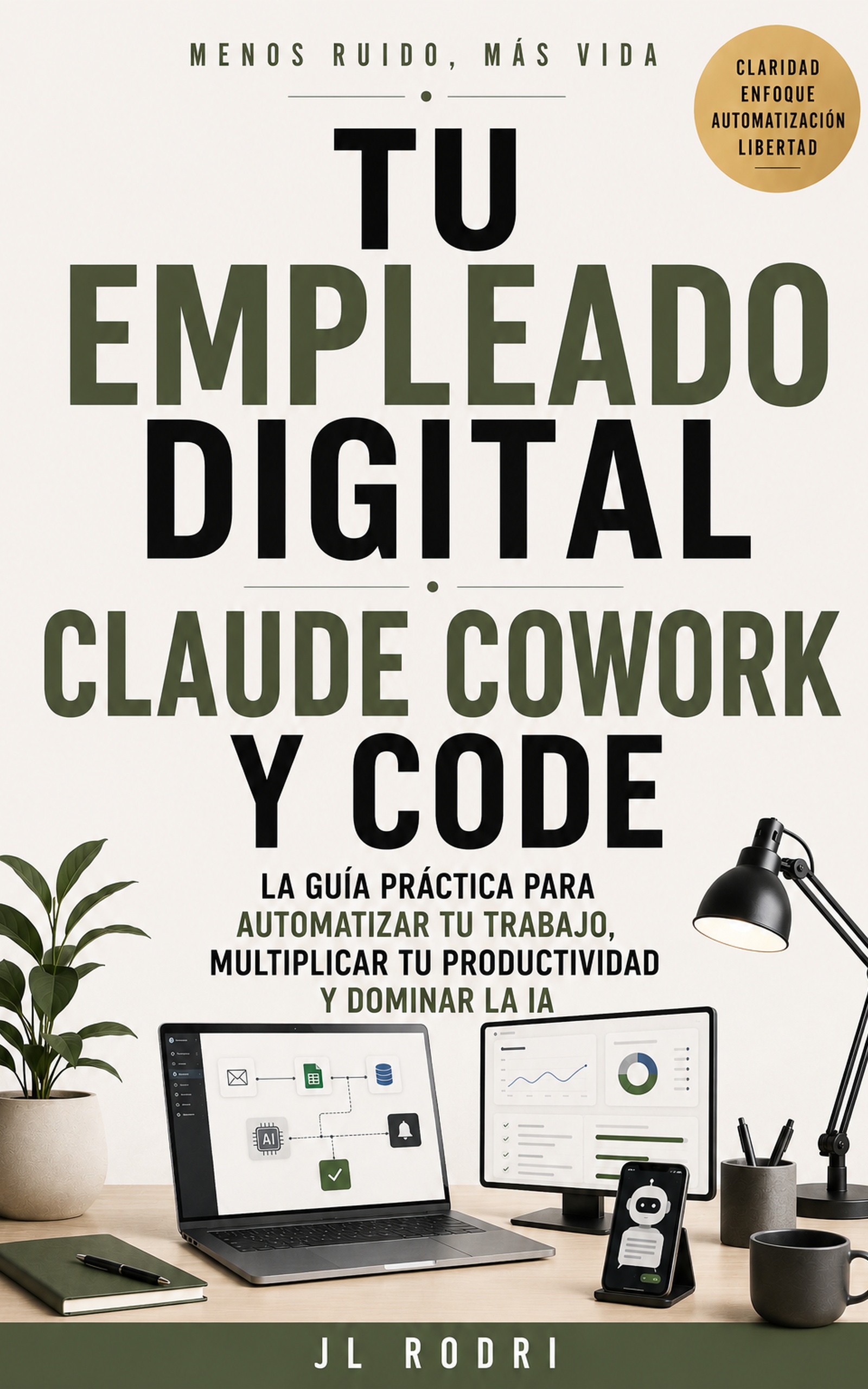
📖 Your Digital Employee
Claude and AI as your best collaborator