
Why the last hour of the day matters more than you think
Most people vaguely understand that screens before bed are not good. But between understanding it and doing something about it there is a chasm that has a name: the infinite scroll, the breaking news notifications, the next chapter of the series, the Twitter thread that started as a five-minute distraction and turned into forty. The hour before sleep is the hour most colonized by technology in the lives of millions of adults, and it is also the hour that most influences the quality of rest.
The nightly digital detox is not some baseless wellness fad. It is a practice with clear physiological support: what happens to the brain and body in the transition between wakefulness and sleep depends largely on the conditions of that last hour. And exposure to screens interferes with that process in concrete, measurable ways.
What blue light does to your brain
The screens of mobile phones, tablets and computers emit light in the blue spectrum, which is the part of visible light most similar to midday sunlight. The brain uses precisely this type of light as the main signal to regulate the circadian cycle: when it detects it, it interprets it as daytime and suppresses the production of melatonin, the hormone that prepares the body for sleep.
Looking at your phone in bed is not just an unrelaxing habit. It is sending the circadian system a direct signal to remain active. The most immediate consequence is that it is more difficult to fall asleep—sleep latency increases—and that the deep sleep of the first few hours, the most restorative, is reduced. The next day, tiredness is not just subjective: cognitive performance, memory, and emotional regulation are objectively worse after a night of fragmented or lower-quality sleep.
The devices’ blue light filters and night modes help marginally, but do not eliminate the problem. The stimulating effect of screens is not only luminous: it is also cognitive and emotional. A news video, a tense conversation on WhatsApp or a work email are stimuli that activate the nervous system regardless of the light spectrum they emit.
The dopaminergic loop that keeps you awake
Social media platforms and video apps are designed to keep attention engaged. Infinite scrolling, flashing notifications, personalized content that always has something more relevant right after the last video: all of this activates the dopaminergic reward system continuously and at low intensity. It is exactly the type of stimulation that prevents the brain from entering the calm state necessary to initiate sleep.
It’s not a lack of will. You’re using tools designed by engineers specialized in maximizing screen time against a nervous system that needs slowing down. The asymmetry is enormous. And the result is millions of people staring at the ceiling at midnight, phone in hand, wondering why they can’t sleep.
How to implement a real nightly digital detox
The first decision that makes the rest possible isset a cut-off time for screensand treat it with the same seriousness with which you would treat an important meeting. Not as an aspirational goal, but as a concrete limit. For most people, cutting off screens sixty to ninety minutes before they want to fall asleep produces noticeable changes in sleep within a week.
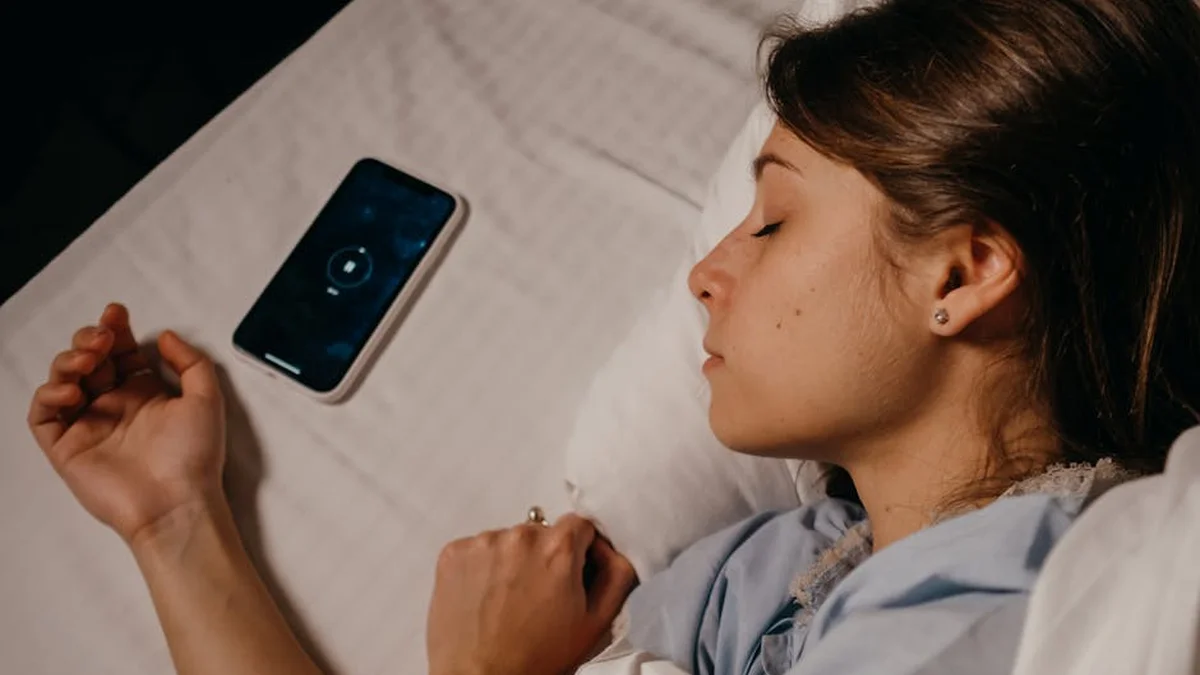
The second decision istake your cell phone out of the bedroom, or at least carry it out of reach of the bed. Many argue that they use the phone as an alarm clock, which is perfectly replaceable with a conventional alarm clock for less than ten euros. The presence of the phone on the bedside table—even if it is not used—increases the likelihood of checking it at some point during the night.
The third part is deciding what to do in that last hour. It is not enough to ban screens if there is nothing to replace them. Reading a physical book, listening to low-arousal music or podcasts, doing light stretches, taking a hot shower, or simply talking are activities that promote deactivation of the nervous system. They don’t have to be sophisticated rituals. They just have to not be screens.
Managing common resistance
The most common resistance to the nighttime digital detox is “I need to check my work in case there is something urgent.” This belief is worth examining: how often does something really happen that can’t wait until the next morning? In most jobs, the honest answer is almost never. And the cost of that last-minute review—worse sleep, worse performance the next day, greater stress—often far outweighs the benefit of responding to an email ten hours earlier.
Another common resistance is that screens are the only way to disconnect after an intense day. It is understandable: the activation threshold is minimal, they require no effort and generate an immediate feeling of entertainment. But disconnecting and relaxing is not the same. Passive scrolling keeps your brain active even if it seems like you’re resting. Real rest requires a reduction in stimulation, not a change in stimulation type.
Expected results and within what period
Changes in sleep when a nightly digital detox is consistently implemented are noticeable in one to two weeks. Sleep latency—the time it takes you to fall asleep—is usually reduced. The quality of deep sleep improves. Awakening is more gradual and less abrupt. And during the day, mental fatigue—that cloudy-brain feeling that so many people attribute to work but that is partly a result of poor sleep—decreases.
It is not a magic solution nor does it solve sleep problems that have more complex causes on its own. But it is one of the most evidence-backed low-cost, high-impact interventions to improve rest. And unlike many health recommendations, it doesn’t require extra money or time: just rearranging the last hour of the day.
This is just an excerpt. The complete book gives you step-by-step techniques to disconnect and rest.
📖 Turn off your Mind
How to stop overthinking and regain your peace of mind