From creator to entrepreneur: the scariest step
There is a moment in the lives of many TikTok creators when they realize that their content has generated more than just followers. It has generated demand. People asking in the comments “do you have a course?”, “do you sell the templates you use?”, “do you offer individual consultations?” sustainable way.
Creating your own products and services is not just a way to monetize. It is a way to deepen your relationship with your audience. Whoever buys your product is not just another follower, they are someone who trusted you enough to invest money. That deserves a product that lives up to it.
Digital products: the most accessible gateway
Digital products are the most affordable way to create something of your own because they require no inventory, shipping, or unit production costs. An ebook, a template, a mini video course, a downloadable guide. All of this is created once and sold indefinitely. The marginal cost is zero, which means that each sale is practically profit.
The most common mistake is creating the product you want to create instead of the one your audience needs.Before spending weeks writing an ebook or recording a course, ask.Post a video asking what your audience would need.Take a survey in your stories.Read recurring comments.The product you sell is not the one you find interesting, it’s the one that solves a problem your audience already has.
How to validate an idea before creating anything
Validation is the step that most skip. They get excited about an idea, create the product, and then discover that no one wants it. Validating means checking that there is real demand before investing time and resources. The simplest way is to offer the product before creating it. Post a video describing what you are going to launch, link to a reservation page or an interest form, and see how many people sign up. If no one signs up, the product has no demand. If 50 people sign up, you have a signal. clear that it is worth it.
Another way to validate is to sell your time first. If you plan to create a course on something, offer one-on-one consultation sessions on that topic first. If people pay to talk to you for an hour, they will also pay for a course that packages that knowledge. If no one is willing to pay you for your time, they are unlikely to pay for a recorded course.
Prices: the fear of charging what it is worth
One of the most common blockages is charging little. The reasoning is usually: “it’s my first product, I can’t charge much.” But charging little has three problems. First, it devalues your product in the buyer’s mind. Second, it forces you to sell many more units to earn the same. Third, it attracts a type of buyer who looks for price, not value, and who is usually the most demanding and the least satisfied.
A 30-page ebook on a specific topic can cost 9 euros or 29 euros. The difference is not in the number of pages, it is in the perceived value. If your ebook solves a problem that costs someone hours of research, 29 euros is a bargain. If it only summarizes information that is available for free anywhere, 9 euros is expensive. Charge for the value you deliver, not the format.
Distribution: from TikTok to sale
TikTok is the beginning of the funnel, not the end. Your video generates interest, your profile generates trust, and your link generates conversion. But between the video and the sale there are several steps that you must facilitate. The link in your bio should lead to a clear page that explains what you offer, how much it costs and how to purchase. Not to your generic landing page. To the page for that specific product.
Gumroad, Teachable, Hotmart, WooCommerce. There are many platforms to sell digital products. Choose the one that is easiest to use and the one that charges the least commissions for the type of product you offer. You don’t need a sophisticated online store at the beginning. You need something that works, that is fast and that doesn’t take up your time creating content.
The product as an extension of the content
The best product to sell on TikTok isn’t the one you invent out of thin air. It’s the one that grows naturally from what you already do. If your content is about personal organization, your product can be a planning template. If it’s about cooking, a recipe book. If it’s about finances, a monthly budget guide. The product should feel like the next logical step after your videos, not something disconnected.
When the product is a natural extension of the content, the sale does not need to be aggressive. Your videos are already showing that you know what you are talking about. The product simply offers depth to those who want more. And that is the type of sale that works on TikTok: the one that does not seem like a sale, but rather an invitation to continue learning.
What you just read is just one chapter. The entire book has 20 step-by-step strategies to master TikTok in 2026.
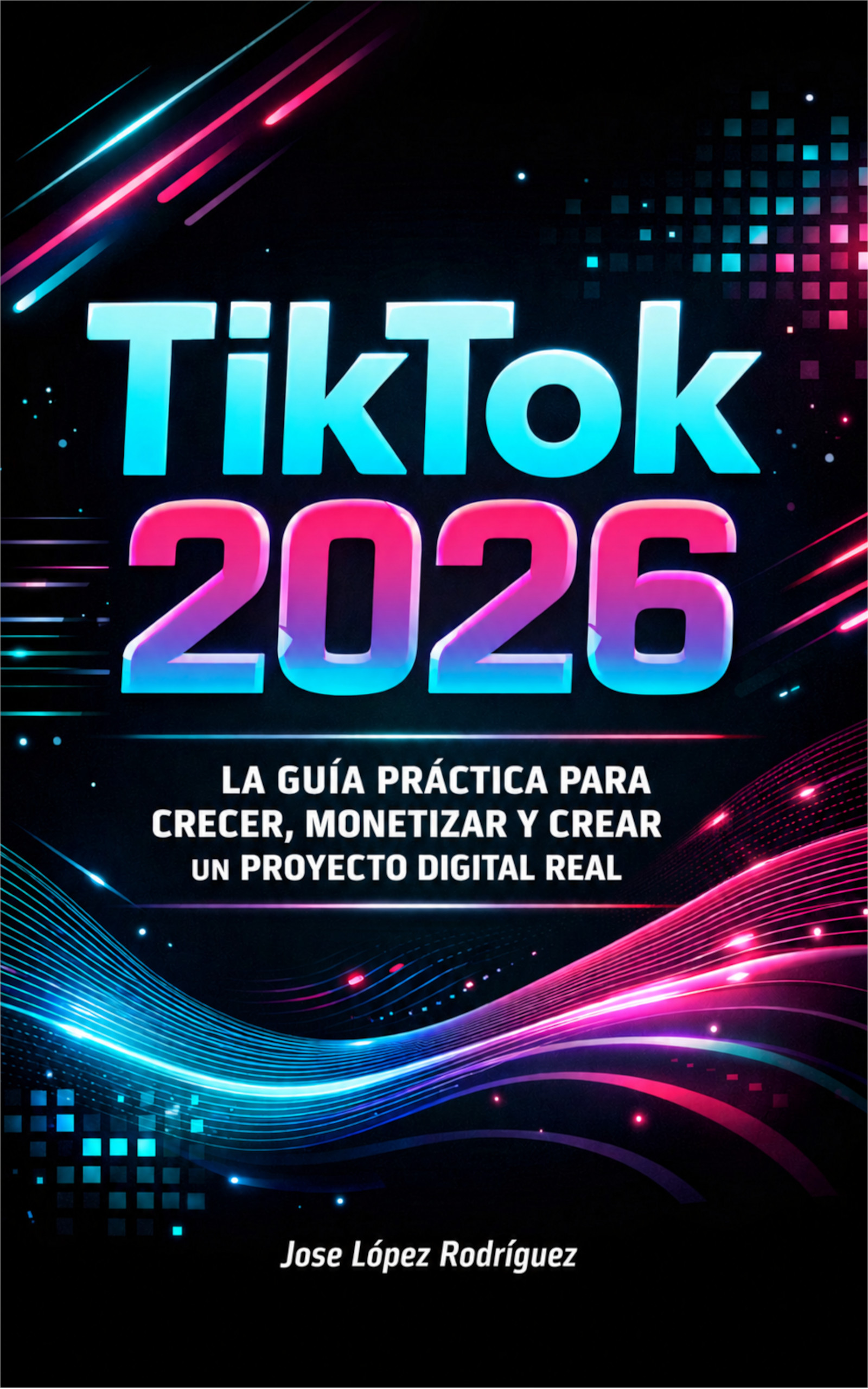
📖 TikTok 2026: The Definitive Guide
Strategy, viral content and audience growth