
If you’ve tried ChatGPT and it left you cold, you’re not the only one. Manuel, a tax manager in Albacete with 80 clients, also tried ChatGPT in 2024. He asked for an email for a delinquent client. The text came out correct, polite, elegant. It worked. Three months later he stopped opening it.
Not because it was bad. But because nothing important changed. Every time I came in I had to explain everything again. Every time I went out, the real work was still there: messy PDFs, half-finished Excel, unsent reminders, clients who hadn’t invoiced for three months and no one had noticed.
His daughter told him:«Try this. Not so I can write things to you. To do things.”A week later, Claude had moved all the February invoices to the correct folder, drafted non-payment reminders in Manuel’s exact tone, marked in Excel who had paid and who had not, and left a clear note: a client had not invoiced for three months. Manuel didn’t think “how smart this AI is.” He thought:“This is work.”
Responding is not doing: the difference that changes your day
Most people use an AI like they would use Google with good writing. They ask, they receive text, they read it and then they do the work. That’s itreply. Replying helps you clarify ideas, think better, and write faster. But it doesn’t change your day if you’re still the one copying, pasting, moving files, checking folders, and pursuing small tasks that together eat up hours.
Executing is something else.To execute is to have something happen in the real world of your work: files that move, documents that are created, data that is updated, notices that appear without you asking for them. Claude was not born to be “a more educated ChatGPT”. Born with the idea ofdo, not just to say.
The comparisonClaude vs ChatGPTIt’s not a question of which generates prettier texts. It’s a matter of what kind of work you need done. If you want answers, any AI will do. If you want work to move forward, you need one designed to run.
The character that matters: reliability vs. agreeableness
Anthropic, the company behind Claude, made an unusual decision: not to train the model just to be liked or sound convincing, but to behave in waysreliable. This can be seen in something very specific: Claude is less prone to exaggeration, less of a motivational coach and more careful with what he can and cannot do.
It’s not perfect. No AI is. But he has a key trait for serious work: he prefers to say “I don’t know this” or “I can’t do this” rather than invent an elegant way out. This character is what allows him, when you give him permission to act on files or processes, not to behave like a creative student, but rather like someone aware that he is touching real work.
Three models, three employee profiles
Inside Claude there is not a single brain. There are three main models, and choosing wisely when to use each one makes the difference between spending money and spending it well:
- HaikuHe is the fast intern. Does short, repetitive tasks, without much reflection. Ideal for volume and mechanics.
- SonnetHe is the reliable employee. The one you will use 80% of the time. Understand context, make good decisions and work with consistency.
- OpusHe is the expensive consultant. Slower, deeper and much more expensive. You take it out when making mistakes is expensive.
Not all work deserves the same employee. Choosing wrong doesn’t break you today. It breaks the bill and the quality over time. The key to productivity with AI is not always using the most powerful model, but the right one for each task.
Claude lives in three work tables
Claude doesn’t live alone in a chat window. Work in three different environments:
- Chat: day to day. Think, decide, write, review.
- cowork– When you want me to view and play files on your computer.
- Claude Code: when the volume or complexity exceeds what is comfortable for a graphical interface.
Claude is not a conversation, he is a coworker with different tables. Knowing which one you are in and what each one is for completely changes the way you take advantage of it.
A single AI does not scale: orchestration as an advantage
Imagine a company with a single person who thinks, executes, reviews, writes, researches and mass produces. Does not scale. The same thing happens with AIs. Claude shines at making decisions and executing delicate tasks, but he’s not always the best choice for producing hundreds of units, searching with sources, or handling sensitive data.
The winning model is not to have a single AI, but to orchestrate:Claude decides and orchestrates. Other AIs run volume. Local models touch the sensitive.That architecture is what turns AI from curiosity into productive infrastructure.
Start by delegating what needs to be done, not what needs to be answered
The most common mistake is to try Claude with the same task that you already tried with another AI. «Write me an email.» If that is your first test, this book fails. Start with something different: a task that, if someone did it for you, would really free up your time. Move. Order. Detect. Prepare. Warn. Reply is fine. butadvanceIt’s something else.
This is just a sample. The complete book teaches you how to turn AI into your most productive employee.
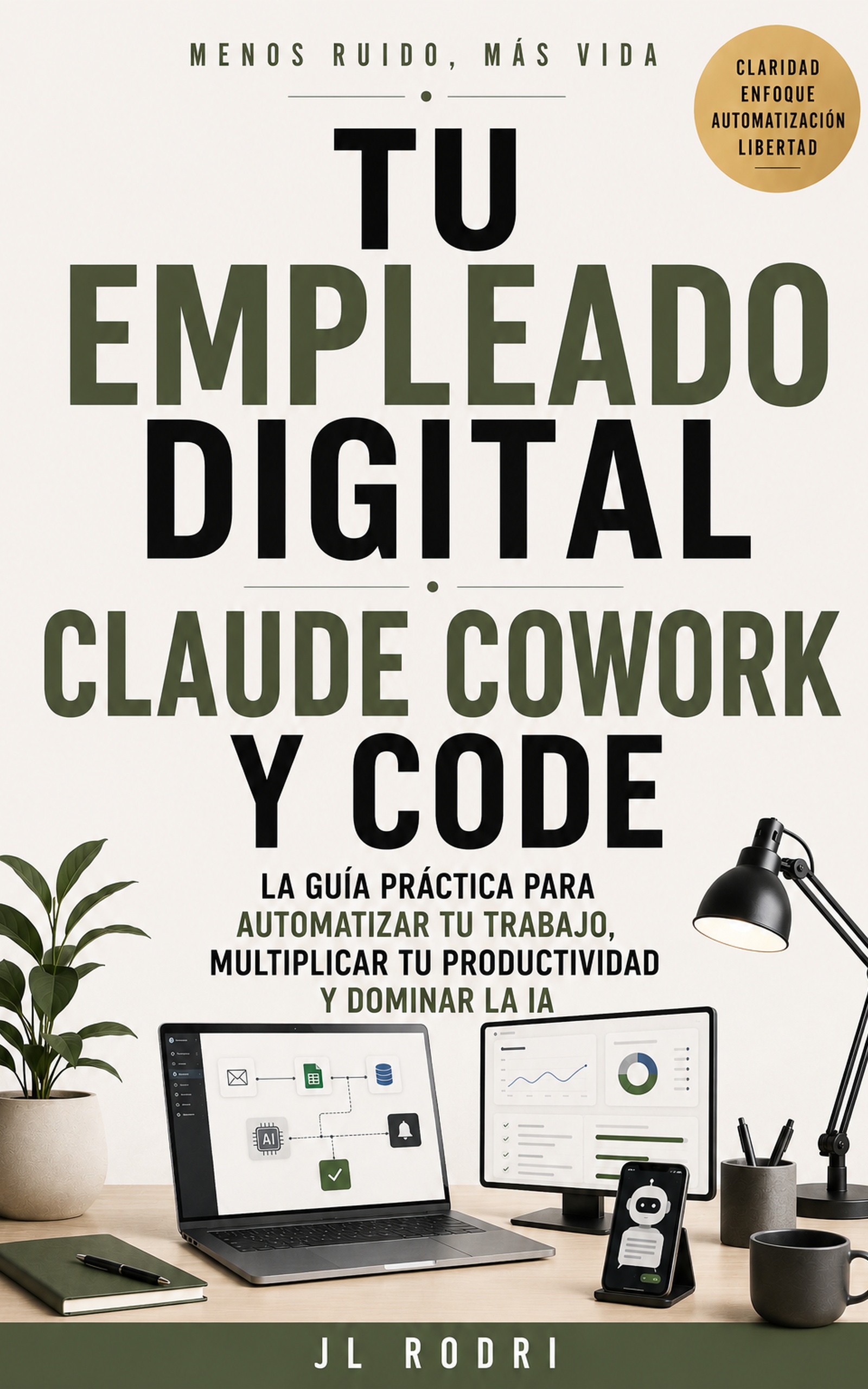
📖 Your Digital Employee
Claude and AI as your best collaborator