
Carmen had been working on her app to manage freelancers for four months. He had done interviews, a simple MVP, and a plan that, in his head, was already pretty clear. He asked five trusted people for their opinion. They all agreed: “It looks good”, “I would use it”, “This fits with what is on the market.”
To keep herself calm, she passed the plan to Claude and askedfeedback. The response was polite, orderly and positive. He pointed out strong points, some minor improvements and closed with a constructive tone.
Carmen should have gone to sleep peacefully. But something didn’t fit. There was no friction. There was no discomfort. There was no point that hurt him to read.
Audit decisionswith AIIt means using it to attack your ideas, not to confirm them.
The collaborative bias: AI proves you right
By default, AIs are designed to collaborate. That means something very specific:They tend to validate the framework you give them.
If you present an idea and ask for an opinion, the usual thing is that:
- They order it
- Make it sound reasonable
- Reduce weak points
Not because they lie. Because they are not there to contradict you unless you ask them to.
If you seek validation, you will get it. If you want criteria, you have to demand friction.
Carmen changed a single sentence in the order. Instead of asking for opinion, he asked for attack. That’s where the real work began.
Technique 1: devil’s advocate
It is the most direct. It consists of explicitly assigning him a hostile role. Not educated. Not balanced. Hostile.
For example:
«This is my plan: [description]. Your role is to destroy it. Find the five weakest points and attack them with concrete arguments. Don’t soften. Don’t encourage me.
The value of this exercise is not that everything is correct. It is in thatangles appear that you had not wanted to look at. Even if you discard three of the five attacks, the other two are usually gold.
Technique 2: the premortem
The premortem changes time. Instead of asking what can go wrong, assume that it has already gone wrong.
The project has failed. And now you ask why.
«Imagine that we are on [date] and this project has failed. Write a paragraph explaining what happened. Then list the three errors that led to that result.
This technique avoids defensiveness. This is not about criticizing a living idea. It is about analyzing a corpse. That releases honesty.
When Carmen applied these techniques, the plan did not fall apart. But it stopped looking impeccable. Seven real problems appeared. Three were acceptable. Two demanded changes. And two explained why other similar projects had failed.
He didn’t abandon the idea. He pivoted it before paying the price.
Technique 3: three-voice red team
There is not a single attack here, but several profiles. You ask Claude to think like three different people:
- A pessimistic financier
- An aggressive competitor
- A demanding client
Each one attacks from his own interest. The result is not a flat list of risks. It is astress map.
This technique reveals which parts of your plan are robust against any angle and which only hold up from a favorable perspective.
When NOT to use rebuttal
Not every moment is a good time to attack. Don’t use these techniques when:
- The idea is in the early creative phase
- You are exploring possibilities
- There is still nothing to defend
Refuting too soon kills options. Refuting at the right moment creates clarity.
Don’t use rebuttal as an excuse for not deciding either. The goal is not to dismantle everything. It is seeing clearly enough to move forward without deceiving yourself.
What Carmen really won
Carmen didn’t discover that her idea was bad. He discovered that it was more fragile than it seemed. That distinction makes the difference between moving forward with your eyes closed and moving forward knowing where you may break.
The value of auditing with AI is not in destroying your plans. It’s revealing to you what you weren’t seeing. Blind spots are called that because you can’t see them. But an AI with clear attack instructions can.
The seven problems that appeared were not project failures. They were information. And the information you get before you launch is worth infinitely more than the information you get afterward.
How to get started today
Choose an important decision you have made in the last six months. Apply two techniques:
1. devil’s advocate: Ask Claude to attack your decision with concrete arguments.
2. Premortem: Imagine that the decision has already failed and ask why.
Write down the attacks that you did not know how to refute. Decide if you would make the same decision today. If the answer is yes, it is now a stronger decision. If it is no, you have gained time.
Auditing your decisions with AI is not masochism. It’s the quickest way to find blind spots before they cost you money. The AI never tires of attacking. You decide what to do with the results.
And remember: refuting is not destroying. It is seeing clearly enough to move forward without deceiving yourself. If after auditing your decision you move forward, it is now an informed decision. If you decide to change, you have gained time. In any case, you win.
This is just a sample. The complete book teaches you how to turn AI into your most productive employee.
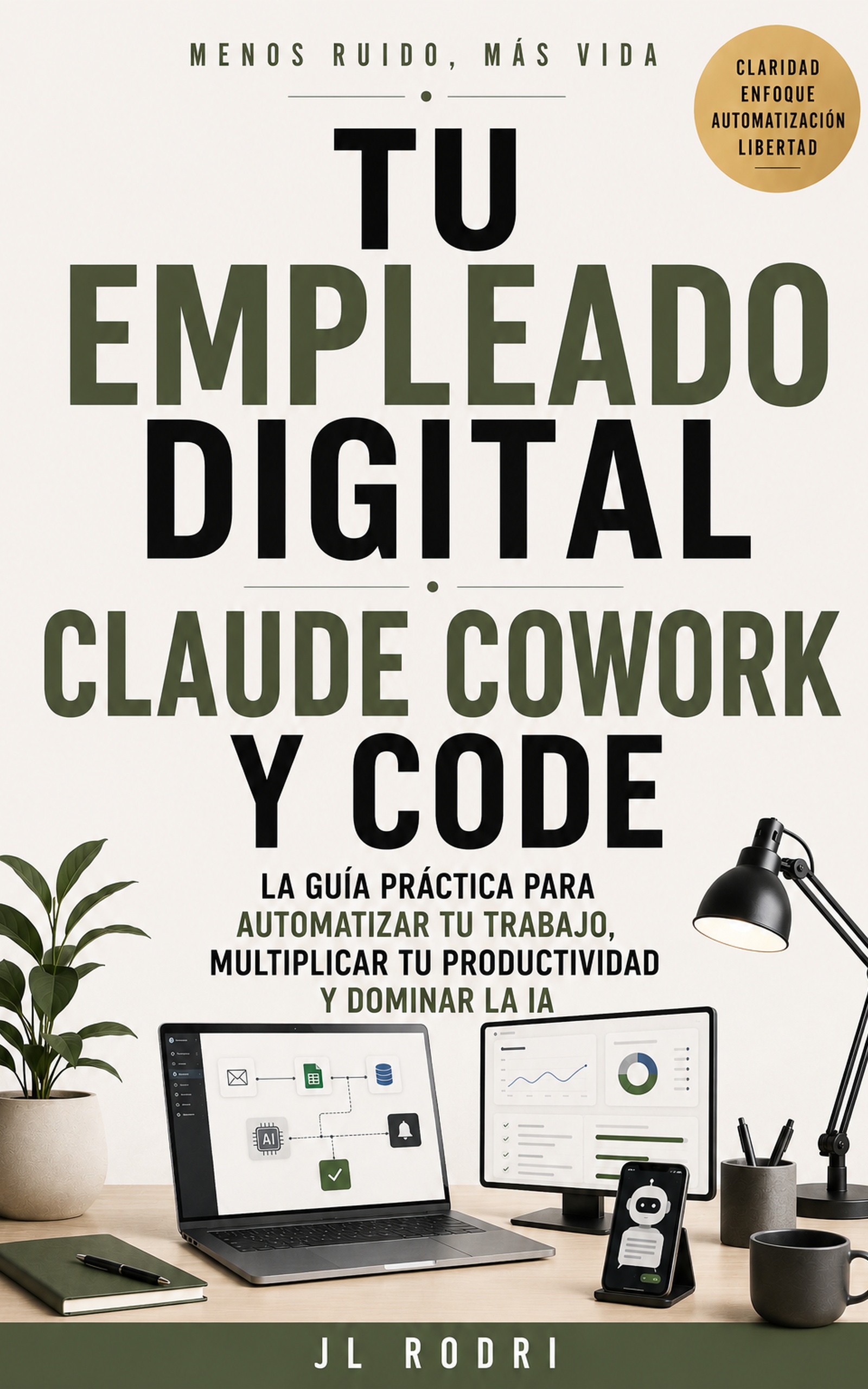
📖 Your Digital Employee
Claude and AI as your best collaborator