A report is only as good as its plan. ChatGPT’s deep research makes that explicit: before any investigation starts, it proposes a research plan that you can review and change. This article turns that single step into a working habit you can apply on your next assignment, with the checks a professional reviewer runs before approving the work.
This guide is written for readers who use deep research on real deliverables: due-diligence memos, market summaries, policy comparisons. It keeps to what the tool actually does — propose a plan you can edit, follow progress as the work runs, cite every source — and to the working habits that turn those mechanics into reports a reviewer can sign.
Why the plan review matters for professionals
Deep research follows the outcome you describe, chooses from the sources you allow, and builds a report you verify through citations. In practice, the plan is where your intent meets the tool’s assumptions. If you skip the review, you inherit those assumptions — scope, sources, time horizon — and discover them too late, in a finished document that answers a slightly different question.
For a professional, that inheritance is not a stylistic detail. Whoever approves the plan owns the scope of the study, so the review is part of the deliverable rather than a preamble to it — and the person asked about the figures at the meeting is still the analyst, not the assistant.
What the tool does with your plan
ChatGPT creates a proposed research plan, you review and modify it before the research begins, and while it runs you can follow progress and interrupt to refine focus, including the sources it may access. That control flow changes the professional posture: the assistant proposes, the reviewer steers.
The loop is short and explicit: the assistant proposes, you edit, the work runs while you follow progress, and any interruption redirects the remaining effort. Each of those moments is a point where a wrong expectation can be caught early — the last cheap place to change the question is the review, not the finished report.
The three checks before approving any plan
- Question fit: does the plan answer the question you will be asked at the meeting, not the one you typed?
- Source fit: are the allowed sources the ones your decision can cite — official statistics, primary documents, named industry data?
- Time horizon: does the period covered match your decision date?
The order matters as much as the content. Question fit protects relevance, source fit protects credibility, and time horizon protects freshness: a plan that clears the first two but ignores the third can return a well-sourced answer to last quarter’s question. Reviewers who walk the three checks in the same order every time build speed, and speed at this stage is what makes the later verification pass manageable.
A worked (hypothetical) example
Imagine you need to compare two regional regulations before a board meeting. The proposed plan lists generic industry blogs. In the plan review you replace them with the two regulatory agencies and pin the timeframe to the last two quarters. The final report now cites the regulators directly, and every claim carries a link you can check in minutes — the difference between a report you can circulate and one you cannot defend.
A worked pattern to keep
The pattern generalizes: the weakest part of a first plan is usually the default sources, and the second weakest is the period. Fix those two in the review and the rest of the plan tends to hold. A reviewer of a competitor scan (hypothetical) replaced a general news feed with the regulator’s registry and an annual sector survey; the resulting report had fewer sources and more of them could be quoted verbatim in the client memo.
From plan to verified report
Once the plan is approved, the report arrives structured, with each claim attached to a source. The professional value of that structure depends on what you do in the minutes after reading it: not admiration, but verification.
Reading citations without over-trusting them
Every deep research output includes citations or source links so you can verify the information. Verified does not mean true: a citation shows where a claim came from, not whether the source itself holds up. The verification step remains yours.
In practice, verification is sampling, not proofreading. Pick the claims that would embarrass you if they were wrong, open the citations behind them, and read the primary context, not the snippet. If a load-bearing claim rests on a syndicated summary, look for the original study it echoes and re-check the figure there before the number enters your memo.
Interrupting is part of the method
Following progress in real time and interrupting to adjust focus is not micromanagement; it is steering. If one branch of the research drifts into marketing material, stop that line while the work is running. You save the budget for the branch that feeds your decision.
Interruptions work best when they name the change, not just the feeling. Replace a drifting branch’s instruction with a narrower one, or point it at a source you already trust, and the remaining work bends toward the edit instead of restarting from zero. Over a full assignment, three or four small corrections beat one large rewrite after delivery.
Keep a review log
Write down what you changed in the plan and why. On the next assignment, that log becomes your starting plan — the method turns single runs into a repeatable, improvable process instead of a fresh start every time.
A log entry needs only three fields: date, what you changed in the plan, and the reason. After a dozen entries, patterns appear — the same source type keeps failing your source-fit check, or certain request phrasings produce tighter plans. That is institutional knowledge accumulating, and it survives staff changes in a way no single chat history does.
A worked pattern to keep
Before circulating any report (hypothetical routine), a consultant re-reads only the opening summary sentence of each section and opens one citation per section — a ten-minute pass that catches most citation mismatches before a client does. Keep the pass light and repeat it every time; a heavy audit that happens once is worth less than a light check that always happens.
Costs and limits you should know before you promise
Deep research is powerful enough to tempt team leads into scheduling client deliverables around it. Before that, the honest move is to check what your plan allows and read the limits as part of the method, not as fine print.
Availability depends on the plan
Deep research usage varies by plan, and the in-product counter shows the tasks you have left. Before you build a weekly deliverable on top of it, confirm what your account actually allows — the official documentation is explicit that usage varies.
That constraint shapes scoping decisions. Usage varies by plan, so a heavy Friday of parallel research may leave the account thinner than expected; checking the in-product counter before committing to a batch schedule is part of planning, the same way you would check a database quota before a data migration. If the allowance runs out mid-week, the fallback is ordinary supervised research, not a broken promise.
Read-only by design
Connected apps feed the research, but deep research only uses read actions from those apps. Your document stores supply evidence; nothing writes back. That separation makes it safer to connect real workspaces.
Safe still deserves a boundary note. Read-only applies to what deep research does with connected apps; it does not certify what a third-party app does with its own data once your workspace is linked. Reviewing connection permissions periodically, the same way you audit any integration, keeps the read-only boundary aligned with your data policy.
What it is not
It is not a substitute for a licensed professional review, and it does not guarantee that cited sources are accurate. Treat the report as evidence-rich, decision-ready input that still needs your professional judgment.
One caution at the end
None of these limits reduces the value of the method; they define where it sits in a professional workflow — a fast, structured, well-cited first pass that you verify and then own. Teams that present it that way to clients keep the trust; teams that present the raw report as finished analysis eventually lose it.
Making it part of the work week
Tools earn their place when they survive contact with a real calendar. The habits below assume a professional with meetings, deadlines, and no time for ceremony — each one is small enough to keep and useful enough to keep.
A five-minute review ritual
Before approving any plan: read the question, count the sources, check the dates. Three lines in your work log: what changed, what was rejected, why. The habit costs minutes and pays back in reports you can defend.
The ritual compounds because it is written. A reviewer who logs plan changes builds a personal standard in a month: what a good source list looks like for their sector, which phrasing of the request produces the tightest plan, when to interrupt. Without the log, every review starts from zero and the same lesson is relearned at full price.
Where the book fits
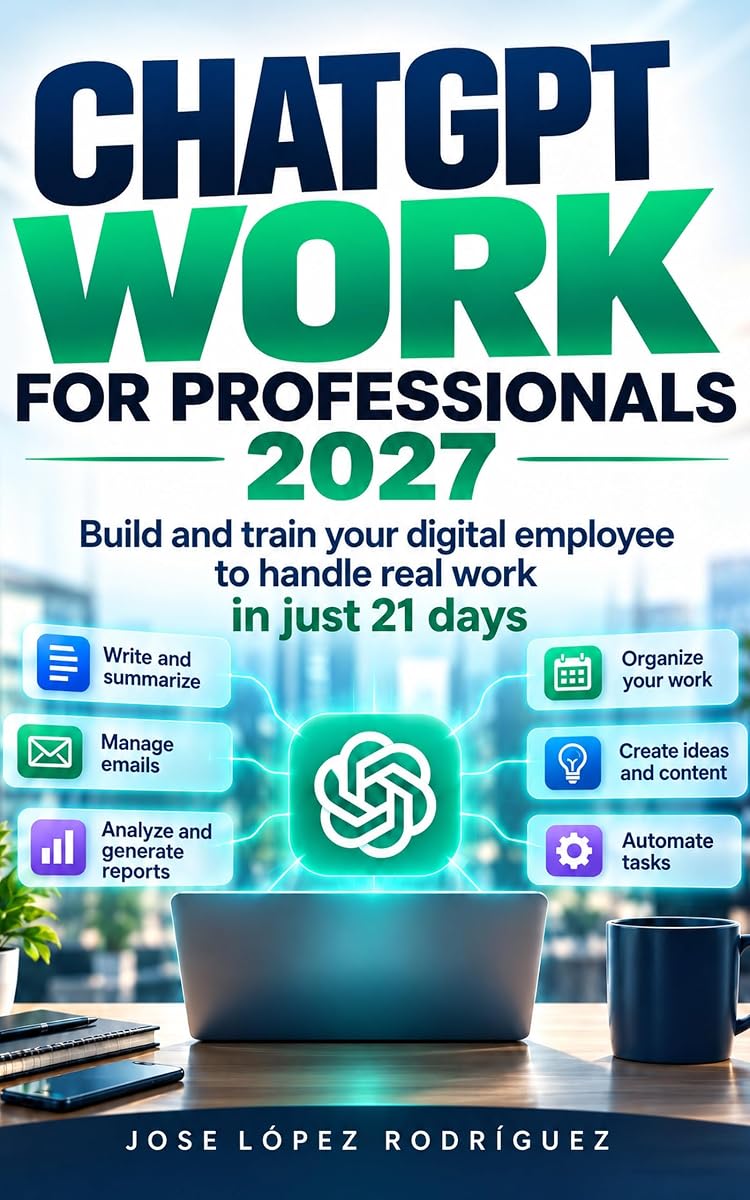
This is one piece of the larger system in ChatGPT Work for Professionals 2027: prompts, templates and verification criteria that turn a clever answer into a documented deliverable. The book builds the surrounding workflow — sources, review, and reuse — that makes tools like deep research dependable.
The connection matters because review is where ad hoc use becomes method. The book formalizes the same loop — prompt, plan, verify, log — across tasks like research, writing, and analysis, so the effort spent learning one tool transfers to the next instead of staying tool-specific.
Your next step
Next time you start research, do not skip the plan screen. Read it like a brief, edit it like a boss, and log it like an auditor. The English edition of ChatGPT Work for Professionals 2027 is free right now on Amazon — see the card below.
A worked pattern to keep
Suppose the same analyst inherits a teammate’s unfinished research on Tuesday (hypothetical). The saved plan shows exactly why the earlier run stalled — the sources allowed were too thin for the question — so the inherited work resumes from a corrected plan instead of an apology. That hand-off is the quiet argument for keeping this step visible: a reviewed plan is the cheapest documentation a team can leave behind.
A weekly analyst cadence (hypothetical) shows the fit: Monday, one deep research run with the plan reviewed and changed as needed; midweek, the verification pass on the claims that matter; Friday, log updates and one reused plan adapted for the next question. Nothing in that week mentions the tool more than once — the method is the schedule, not the feature.
Free right now: the English edition
ChatGPT Work for Professionals 2027: Build and train your digital employee to handle real work in just 21 days, by Jose López Rodríguez, is currently free ($0.00 / €0.00, −100%) on Amazon. Download it in seconds: search for the exact title or the ASIN B0HMP1495Q on your Amazon store.